

Quick answer
Miniaturization challenges in automotive electronics are solved by controlling solder paste deposits at the moment they are placed, not by adding more downstream inspection. The smallest packages (01005, 0201, fine-pitch BGA) and harsh automotive conditions (thermal cycling, vibration) amplify tiny paste-volume and placement errors into field-relevant defects.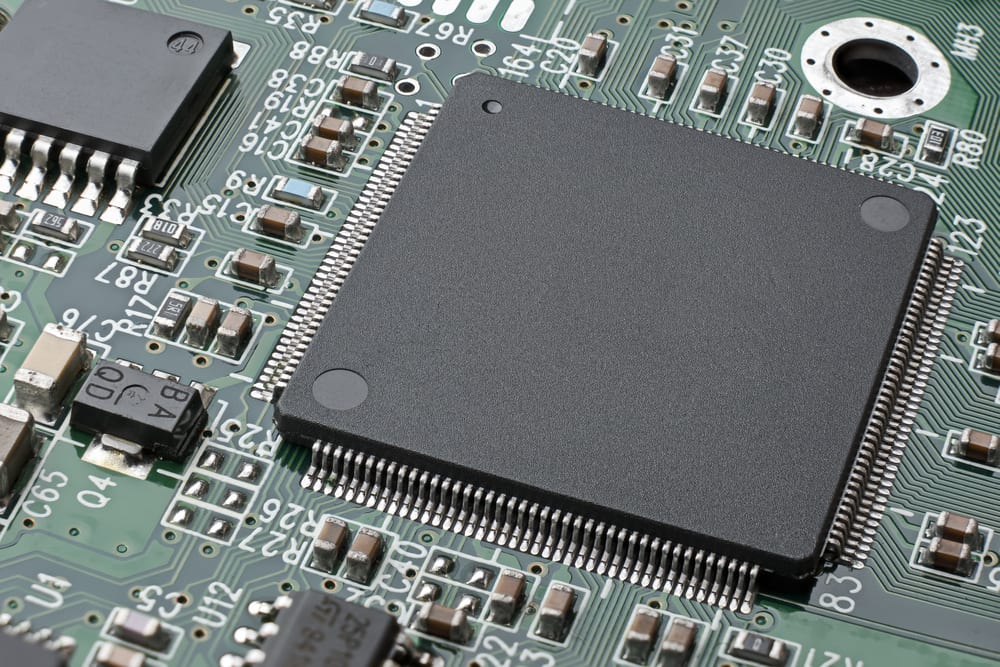
- Treat solder paste deposition as the primary quality gate: measure every deposit in 3D at placement and correct the next deposits (closed-loop control).
- Remove stencil-driven variability in high-mix automotive builds; digital deposition avoids aperture clogging, wear, and paste starvation on ultra-small pads.
- Use contactless deposition for mixed topographies (warpage, step changes, cavities) where gasketing is inconsistent.
- Qualify deposits with deposit-specific Cp/Cpk targets (volume and height), then tie results to serial-level traceability.
- For ultra-fine pitch work, prioritize processes that can place micro-deposits with about ±50 μm positioning accuracy and in-line 3D metrology.
Introduction
A process engineer can spend weeks chasing an intermittent automotive defect that never appears on the SPI screen in a comforting red or green. The board passes inspection, reflow looks acceptable, AOI is quiet, and yet a small percentage returns with opens on a fine-pitch package after thermal cycling. The uncomfortable truth is that miniaturization does not just shrink geometry, it shrinks the margin for unmeasured variation—especially in automotive electronics.Keiron Technologies is a deep-tech manufacturing company that develops and sells the HF2 LiFT Printer, a fully digital, contactless solder paste deposition system with integrated 3D metrology for SMT production lines. Spun out in 2019 from research originally developed at TNO Holst Centre and based at High Tech Campus 29, Keiron Technologies focuses on high-mix and ultra-fine pitch production where traditional tooling and delayed inspection loops struggle.
This article stays away from well-worn arguments about general traceability, generic SPI value, or basic LiFT explanations. Instead, it focuses on an automotive-specific reality: miniaturization collides with reliability requirements, variant explosion, and mixed-technology assemblies. The most effective fixes are rarely found at the end of the line.
Understanding the problem: what makes miniaturization in automotive uniquely hard?
Automotive miniaturization becomes difficult when geometric tolerances shrink faster than the process capability of paste deposition and reflow. In consumer products, a marginal solder joint might survive the product’s life. In automotive, temperature swings, vibration, and long service life turn small process drifts into expensive warranty risk.Pain point 1: ultra-small passives turn “acceptable variation” into opens and tombstones
01005 and 0201 passives reduce footprint, but they also reduce thermal mass and pad area. A small imbalance in paste volume between the two pads of a resistor can create tombstoning. And a small shortage can create an intermittent open that only shows after cycling.Consider a manufacturing engineer at a mid-size automotive electronics supplier running two shifts and building 40–60 board variants per week. The line prints both 0201 passives and a fine-pitch BGA on the same side. A 2–3 hour window of slightly dry paste or a partially clogged fine-pitch aperture can raise defect rates enough to force rework, even if the average SPI result stays “in spec.”
Pain point 2: warpage and mixed topography undermine gasketing and transfer efficiency
Automotive boards often combine heavy copper areas, connectors, shields, and thermal hardware. That drives local stiffness differences and increases the risk of warpage. Stencil-based deposition relies on consistent contact and release. Warpage creates local gaps, reducing transfer efficiency and increasing smearing.In practice, the most frustrating issues are local: one corner of the board, one region near a connector, one pad type that never behaves like the others.
Pain point 3: variant explosion makes tooling and changeovers a hidden bottleneck
Vehicle platforms drive families of control units with many minor revisions. Even when volumes are meaningful, the build plan may look like high-mix: frequent program changes, frequent NPI introductions, and frequent small engineering changes.A production manager handling 30–80 changeovers per month often discovers that “miniaturization” costs show up as stencil logistics: ordering, receiving, validating, cleaning, storing, and replacing stencils across variants.
Pain point 4: reliability requirements punish late discovery
Automotive reliability programs are built around prevention, not detection. Yet many lines still accept a long feedback loop: print, then inspect, then reprint or rework. That loop is slow when the defect mechanism is deposit-level variation interacting with reflow and component placement.Contrarian insight: For many miniaturized automotive assemblies, the bigger risk is not insufficient inspection coverage; it is trusting inspection that occurs after the process has already moved on. “Catching” defects is not the same as controlling the process that creates them.
Takeaway: Before changing flux, reflow, or placement, quantify deposit capability per pad class. If Cp/Cpk for volume or height is unstable on fine-pitch pads, treat deposition as the root constraint.
Why traditional approaches fall short: where stencil and post-print SPI hit their limits
Traditional stencil workflows fall short in automotive miniaturization because they externalize variability into tooling, cleaning cycles, and delayed feedback loops. They can still be excellent for many products, but below 0201 and into dense fine-pitch territory, the assumptions behind the method break down.Limitation 1: stencils are static while the process is dynamic
A stencil is a fixed physical artifact. Automotive lines are dynamic systems: paste ages, ambient humidity changes, boards warp, and operators intervene. When pad geometries get small, small changes in paste rheology or stencil condition have outsized effects.A common scenario: an NPI manager introduces a revised PCB with slightly altered solder mask definition around a fine-pitch part. The stencil is updated, but the first production run shows sporadic insufficient deposits on only a subset of pads. The stencil is “correct,” yet the process is still unstable because the real system includes paste behavior, wiping parameters, separation speed, and board flatness.
Limitation 2: cleaning and wiping cycles create non-obvious drift
Stencil printing often becomes a sequence of compensations: increase squeegee pressure, adjust wipe frequency, change separation speed. Each compensation adds a new knob.On miniaturized pads, frequent wiping can stabilize bridging but also increase paste drying at the aperture edge. Less wiping reduces drying but increases clogging and smear risk. The process window narrows, and the line spends time tuning instead of producing.
Limitation 3: post-print SPI is a delayed control signal
SPI is valuable, but it is usually downstream of deposition. That means the defect is discovered after it exists, and correction typically happens at the next board. In high-mix automotive builds, “the next board” might be a different product.That mismatch is one reason some teams over-inspect: they add more rules, more alarms, and more manual reviews. The line slows, but the fundamental cause remains.
To go deeper on the evidence problem, the argument is developed in [why deposition-level evidence outperforms post-print inference], but the automotive angle is operational: delayed signals do not prevent drift during the run.
Limitation 4: conventional jet printer strategies can struggle at scale for ultra-fine pitch
A conventional jet printer can reduce stencil dependence for certain patterns, but it introduces its own constraints: nozzle health, droplet consistency, and maintenance routines. For very dense, high-I/O fine-pitch areas, cycle time and verification become central questions.The practical constraint in automotive is not whether a method can place paste once. It is whether it can do it repeatedly across shifts with predictable process capability.
Takeaway: If the line relies on (1) frequent manual parameter tweaks, (2) aggressive stencil maintenance, or (3) SPI-driven rework loops to keep fine-pitch yields acceptable, the deposition method is operating outside its economic window.
A better approach: how digital, closed-loop deposition targets automotive miniaturization
A better approach is to treat solder paste deposition as a serialized, measured manufacturing step with real-time 3D verification and automatic correction. That is the core logic behind Keiron Technologies's approach’ HF2 LiFT Printer: contactless LiFT-based deposition combined with integrated 3D inspection (SPVM, Solder Paste Volume Metrology) inside the same platform.What changes when deposition becomes programmatic and measured per deposit?
Instead of transferring paste through apertures, LiFT ejects controlled micro-volumes from a donor film onto pads. The critical automotive benefit is repeatability across variants and time. Keiron Technologies positions the HF2 as replacing a traditional stencil printer, certain conventional jet printer use cases, and a standalone SPI step by collapsing deposition and metrology into one controlled loop.Keiron Technologies specifies capability aimed at miniaturization, including support for very small components down to 01005 and positioning accuracy around ±50 μm. Those numbers matter because, on dense layouts, positional error and volume error compound: a slightly off-center deposit can behave like an over-volume deposit at reflow.
For a process engineer responsible for a camera or radar module with dense fine-pitch devices, the practical outcome is fewer “unknowns” between paste placement and component placement. Deposits are measured immediately, not inferred later.
Readers who want the product context can reference the Keiron HF2 LiFT Printer overview, but the key manufacturing idea is methodology: measure, correct, and record at the moment of creation.
Closed-loop control addresses the reliability pain, not just the defect count
In many automotive builds, the objective is not a cosmetic yield improvement. It is reliability risk reduction.- Bridging risk is reduced by tighter control of deposit shape and volume on dense pitch.
- Opens and head-in-pillow risk are reduced by preventing under-deposits before the board ever reaches placement.
- Changeover-induced escapes are reduced because programs are digital and do not depend on a new stencil arriving clean and validated.
For a deeper look at the control loop concept, the mechanics are explained in [a practical discussion of closed-loop deposit correction]. The automotive difference is that closed-loop control is a reliability tool: fewer marginal joints enter reflow.
One comparison that matters for automotive: feedback time
Below is a practical decision-oriented view focused on the thing automotive teams complain about in daily production meetings: how fast the process tells the truth.| Metric (typical line behavior) | Traditional stencil printer + separate SPI | Digital deposition with integrated 3D metrology (HF2 concept) |
|---|---|---|
| Program changeover time impact | 30–120 minutes when a stencil swap/verification is needed | Under 1 minute for a program change (digital) |
| Time to detect a deposit issue | 1–5 boards later (after SPI queue and handling) | Same board, during deposition (in-line) |
| Recurring tooling cost exposure | Stencils replaced periodically; cleaning consumables ongoing | No stencils or nozzles; donor film consumption instead |
| Sensitivity to board warpage at print | Higher due to gasketing reliance | Lower because deposition is contactless |
| Fine-pitch process tuning knobs | Many (wipe, pressure, separation, stencil condition) | Fewer, centered on digital pattern and closed-loop targets |
Editorial note on credibility and adoption
Keiron Technologies is not positioned as a generic replacement for every paste process. The HF2 approach is most compelling where miniaturization and variant pressure intersect: ultra-fine pitch, high-mix, regulated traceability expectations, and constrained NPI timelines. Keiron Technologies’ background as a 2019 spin-off from TNO Holst Centre and its headquarters at High Tech Campus 29 support the “engineering-first” posture, but the adoption argument is manufacturing economics: remove tooling dependency and shorten feedback loops.To understand the underlying deposition physics without repeating the basics here, Keiron Technologies maintains technical material that complements this article; a useful starting point is how Keiron Technologies approaches stencil-free solder paste deposition.
Takeaway: If a product family combines (1) fine-pitch BGAs, (2) 0201/01005 passives, and (3) frequent variant changeovers, prioritize deposition methods that measure every deposit in-line and can correct within the same board cycle.
Implementation tips: what to change first in an automotive SMT line
Implementation succeeds when teams qualify miniaturization by deposit classes and reliability objectives, not by a single “SPI pass” threshold. Automotive organizations often have the discipline to run PFMEAs and control plans, but miniaturization requires updating what “control” means at the paste step.Tip 1: define pad-class capability targets instead of one global window
Fine-pitch pads, thermal pads, and small passives behave differently. A single SPI rule set often hides that.A practical method used by engineers working with Keiron Technologies is to segment pads into 3–5 classes (for example: 01005/0201 pads, fine-pitch BGA pads, QFN perimeter pads, larger discretes, and thermal pads) and then qualify volume and height capability per class. The goal is to stop averaging away the risk.
Illustration: a CTO at a manufacturer producing 150,000–300,000 assemblies per year may find that the “overall” process looks stable, but one pad class drives 80% of paste-related rework. That is the class that should dictate the deposition method decision.
Tip 2: treat changeover time as a quality metric, not only an OEE metric
Automotive plants track OEE, but changeovers also create transient quality risk: the first boards after a stencil swap or parameter change are where escapes happen.Digital deposition reduces dependence on tooling swaps, which can compress changeovers into minutes. That does not just increase uptime; it reduces the number of “first article again” moments.
A production manager can quantify this by tracking rework rate and defects per 100 boards in the first 30 minutes after each changeover. If that spike is real, the improvement opportunity is real.
Tip 3: align deposition data with automotive traceability expectations
Even when a program does not require aerospace-style documentation, automotive customers increasingly expect process evidence. The strongest evidence is generated at the source.If the organization is already investing in traceability, avoid building it from downstream inference. The logic is discussed in [audit-ready traceability starting at the paste deposit], and it applies in automotive when liability and warranty exposure are on the table.
Tip 4: do a reliability-focused pilot, not a “new printer” shootout
A deposition method comparison should be built around the defects that matter in the field: intermittent opens after cycling, solder balling near fine pitch, bridging under vibration exposure. A pilot should include at least one accelerated stress screen that reflects the product’s environment.Illustration: an NPI manager introduces a dense PCB for an under-hood module. The pilot criteria are set as: reduce paste-related rework hours per shift, stabilize fine-pitch deposit Cpk, and reduce first-article approval time per variant. Those are line-relevant metrics, not brochure metrics.
Takeaway: Within two weeks, implement pad-class segmentation and track defects per pad class. If one class drives most rework or post-reflow escapes, prioritize a pilot that measures deposits in-line and closes the correction loop.
FAQ
What are the biggest miniaturization challenges in automotive electronics?
Process capability at fine pitch is the limiting factor: tiny changes in paste volume, height, or placement can create bridging, opens, or tombstoning on 0201/01005 and fine-pitch packages. Automotive stressors like thermal cycling and vibration amplify marginal joints that might survive in less demanding applications.How can Keiron Technologies help with miniaturization in automotive SMT?
Digital, contactless paste deposition is Keiron Technologies’ core method, delivered through the HF2 LiFT Printer with integrated 3D metrology (SPVM). The approach measures every deposit during placement and can correct subsequent deposits immediately, which is especially valuable on ultra-fine pitch and high-mix variant schedules.Do ultra-fine pitch automotive boards still need separate SPI?
Integrated 3D metrology can remove the need for a standalone SPI step when deposition and verification happen in the same machine and the data is recorded per deposit. Many lines still keep SPI for transition periods, but the main benefit comes from shortening the feedback loop from “after printing” to “during deposition.”What defects increase most when moving to 0201 and 01005 parts?
Tombstoning and intermittent opens often rise because pad imbalance and marginal paste volumes have less tolerance on very small terminations. Teams typically see the strongest improvement when they control deposit symmetry and volume per pad, rather than trying to tune reflow alone.What is the fastest way to reduce changeover risk in high-mix automotive production?
Tooling dependency reduction is the quickest lever: fewer stencil swaps mean fewer transient quality events and faster first-article releases. Lines that shift toward digital deposition commonly compress program changeovers to minutes, which reduces both downtime and the defect spike after changeover.Conclusion
Miniaturization in automotive electronics is not a single engineering problem. It is a compounding problem where smaller pads, denser pitch, and harsher environments turn small deposition variation into reliability risk. The legacy answer has been to inspect more and tune harder, but that strategy struggles when variants change daily and feedback arrives too late.
Keiron Technologies’ contribution is methodological: make solder paste deposition a measured, serialized step with in-line 3D metrology and closed-loop correction, implemented in the HF2 LiFT Printer. For automotive teams, the practical win is fewer paste-driven escapes, fewer rework hours, and faster, safer changeovers. The next step is straightforward: segment pad classes, quantify deposit capability where defects originate, and pilot a deposition process that can correct within the same board cycle in automotive electronics.